As we enter the 2026–27 school year, we want to take a moment to look back at what happened inside our Community Schools last year—and, perhaps more importantly, what the data tells us about the work.
While students were away for summer, our Community Schools Coordinators were anything but on vacation. They spent the summer digging into the data they had collected throughout the school year, evaluating what worked, identifying areas for improvement, and working together to determine how we can continue strengthening the Community School model.
That data collection happens all year long. Coordinators track everything from every time a Resource Room is used, to meals served at Community Nights, to students participating in mentoring groups. They also gather information directly from the people at the center of this work through surveys, interviews, and conversations with students, families, staff, and community partners.
The result is nine individual Community School impact reports—each one representing a year of connecting students and families with resources, bringing dozens of local organizations and volunteers into our schools, and working alongside school administration to put the Community School pillars into practice
Behind every number is a tremendous amount of work by our Community School Coordinators, our Community Schools Team, our data evaluator, school staff, and community partners.
And behind all of that work is you.
You may not spend your days in the hallways of our schools, but your support, your willingness to learn about this work, and your help sharing the story of Community Schools all strengthen what we are able to do across Buncombe County.
So, let's look at the numbers.
Across All 9 Community Schools
1,188 Students Accessed School-Based Health Services
79% of students attended 90% or more of the school days
4.4 out of 5.0 Students ranked their confidence in their ability to be successful in school
These numbers offer a snapshot of what happens when schools and communities work together to address the whole student—not just what happens inside the classroom.
But the most compelling part of the data is what it looks like at each individual school.
Asheville Middle School
780
Individual students participated in Partnership-based Programming from 8 community partners that UWABC helped organize
And students noticed the difference:
“I like that they support us young girls, and they believe in us- 6th grade girls.”
A.C. Reynolds Middle School
 759
759
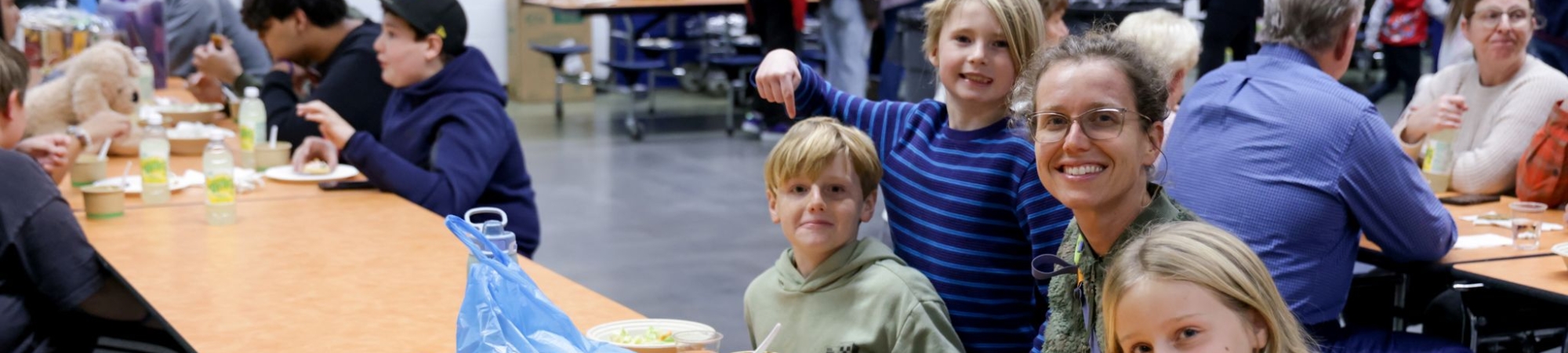
students and family members attended Community Nights
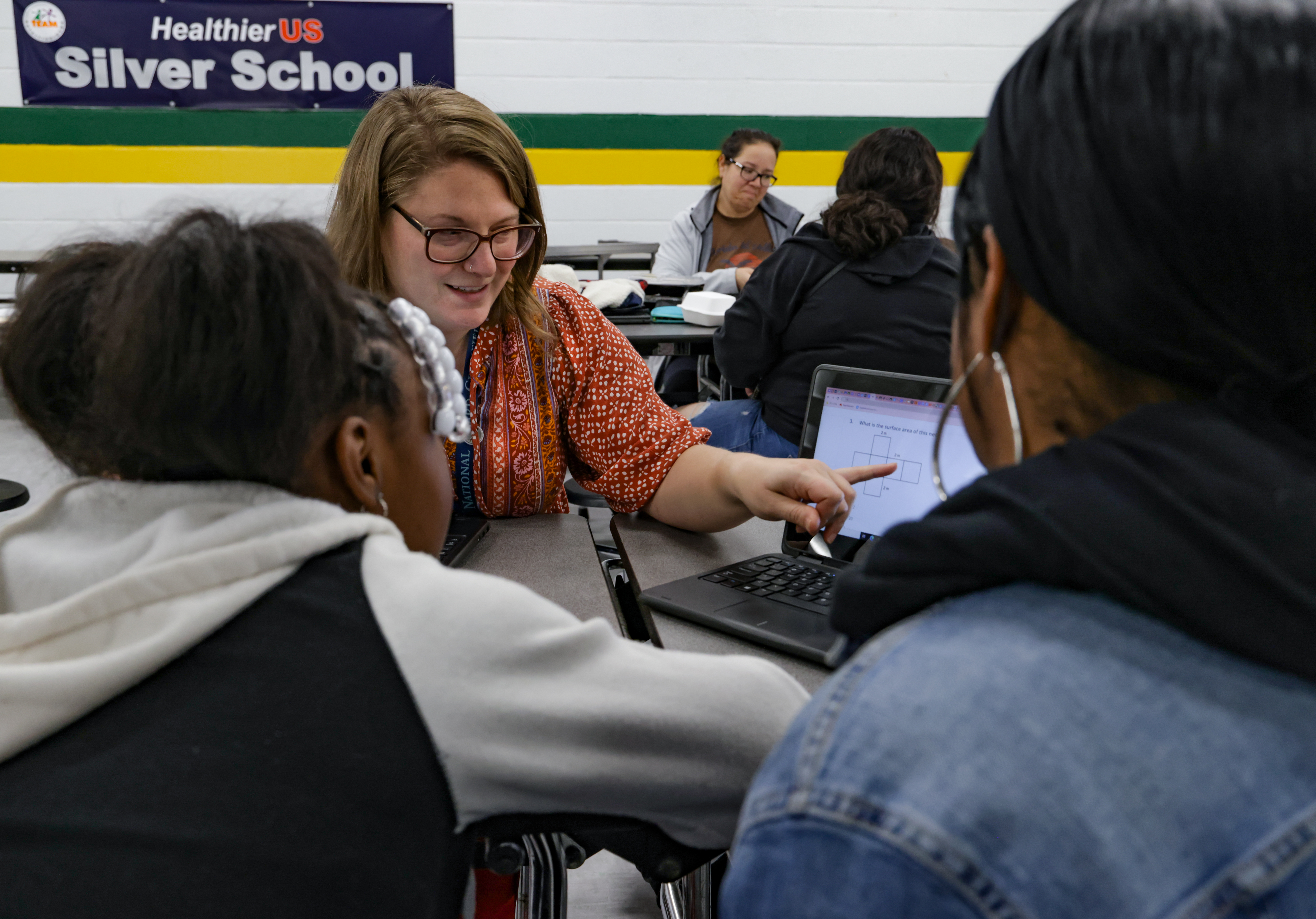
One parent of a 6th-grade student said of the after-school programming at A.C Reynolds:
“ The STEM club was engaging and exciting for my son and he really enjoyed the camaraderie with students and teachers.
Clyde A. Erwin Middle School
403
Reported Usages of the Resource room by Students, Families and Staff
And according to one mentor group leader:
“ Students showed increased confidence, self-expression, and peer support.”
Enka Intermediate School
1,145
Students and Family Members Attend Community Nights
One EIS staff member shared what those evenings mean to the school community:
“Community nights have made such a positive impact on students, parents, and teachers. Teachers get to see students outside of school and meet theirparents/guardians. This is special, and also, the parents can then put a face with a name. It gives students, parents and teachers a chance to eat a meal at no cost and enjoy it with others in the community.” - EIS Staff Member
Enka Middle School
176
Students participated in after-school clubs/tutoring year-long
For one 8th grader in NJHS, that participation was about more than an after-school activity:
“I like that I can help people in my community and I can grow as a person while I do that.” - 8th Grader in NJHS
Hall Fletcher Elementary School
15,446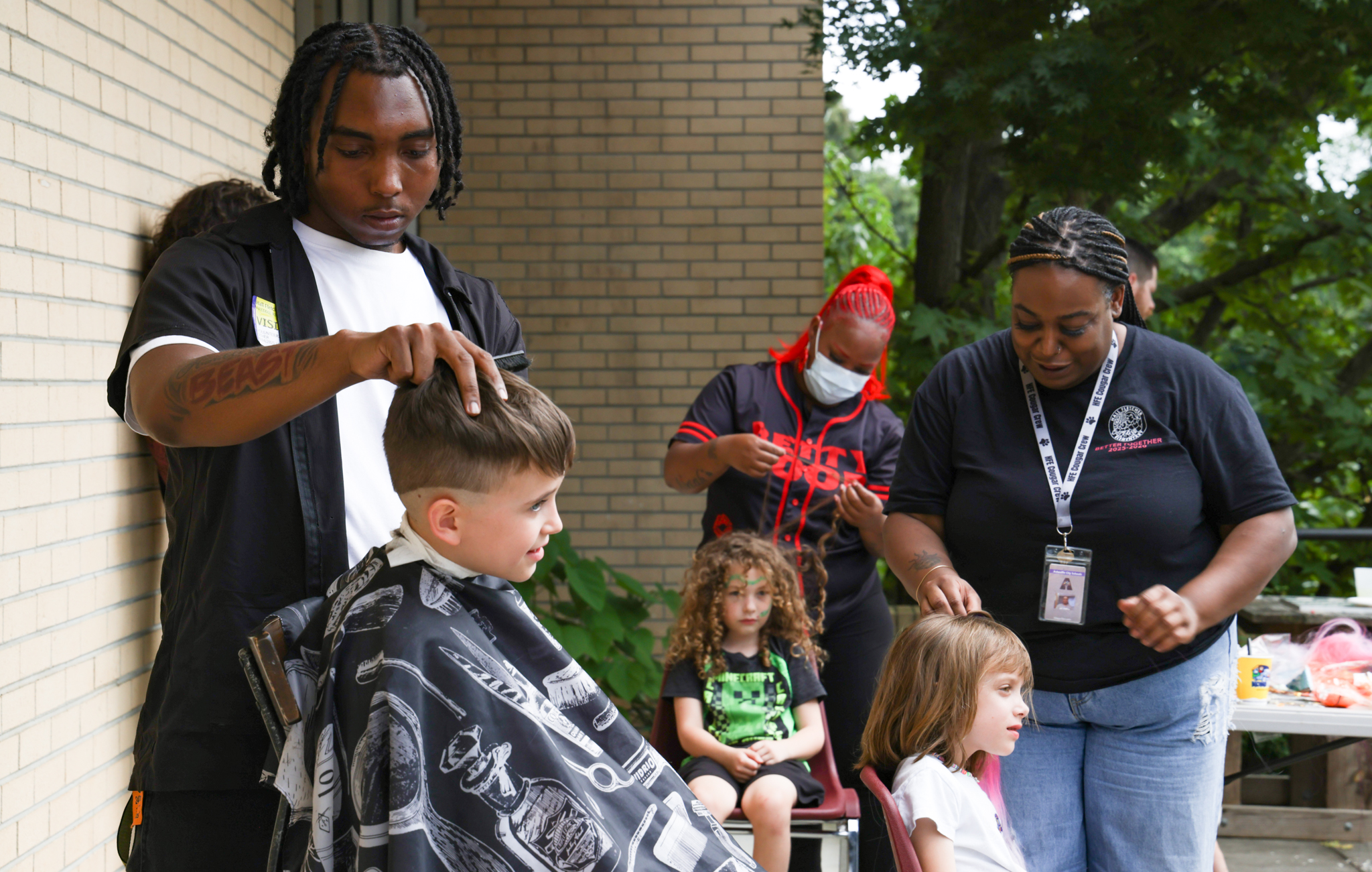 Reported Usages of the Resource room by Students, Families and Staff
The significance of that number becomes even clearer when we hear from the people experiencing the impact firsthand:
“United Way program and being a community school has made a huge difference at HFE. This community has a huge need with our families, and creating a space where parents feel supported, have access to resources, enrichment opportunities for our students, and allowing for input from all
stakeholders is so valuable for increasing student success.” - Teacher
North Buncombe Middle School
111
After school Counseling Sessions
And one 7 Grade Student described the environment created through that support this way:
“ I love the unity and the fact that the people had no judgment about my identity and interests.” -7 Grade Student
Owen Middle School
 273
273
individual students participated in Partnership-based Programming from 10 community partners
When asked about mentor groups, one 8 Grade Student put it simply:
“They make me feel safe” - 8 Grade Student about mentor groups
If you were counting along, you may have noticed that we listed eight schools—but our Community School network has nine.
You’re right, dear reader.
We are currently transitioning from Asheville High School to Ira B. Jones Elementary School. This will be the second elementary school in our Community School network, and after seeing the great success at Hall Fletcher Elementary, we can’t wait to see what the data tells us about Ira B. Jones Elementary next year.
And that is an important part of looking at this data: these numbers are snapshots, not the whole story.
They represent only a portion of the information our Community School Coordinators collect throughout the year. The reports contain far more detail about student engagement, family participation, partnerships, resources, programming, and the ways schools are responding to the needs identified within their communities.
Now, with the 2026–27 school year already underway, our Coordinators are back at work—building relationships, connecting students and families to resources, supporting school staff, and, yes, collecting another year of data.
Next summer, we'll be looking at that data again.
Community Schools Don't Do This Alone
None of these numbers happen in isolation.
A Community School works because schools, families, students, community organizations, volunteers, and funders come together around the needs of a particular school community.
We are especially grateful to the community partners who work alongside our Coordinators to identify the highest needs and make an impact directly in our schools:
Our Community Partners:
-
AB Tech
-
Asheville City Schools Foundation
-
Big Brothers Big Sisters WNC
-
Black Men Mondays
-
Blue Ridge Health
-
Bountiful Cities
-
Bounty & Soul
-
Buncombe County
-
Delta House
-
Girls on the Run
-
Journeymen
-
MANNA
-
LEAF
-
RiverLink
-
UMOJA
-
UNETE
-
UNC Asheville
-
Warren Wilson College
-
Working Wheels
The data gives us something to celebrate. It also gives us something to build on.
Because Community Schools are not about reaching a finish line at the end of a school year. They are about continually listening, learning, measuring what matters, and using what we learn to make the next year stronger.
And we're already underway.