If you know what you’re looking for, then it’s unmistakable.
To the untrained eye in 2026, you might see a few trailers on a lot in Swannanoa. But if you know what you’re looking at, you see people who lost their homes, rental units, and much of their property in the flooding brought on by Hurricane Helene.
Across the Swannanoa Valley, 438 homes were destroyed or damaged by the storm, according to Swannanoa Communities Together.
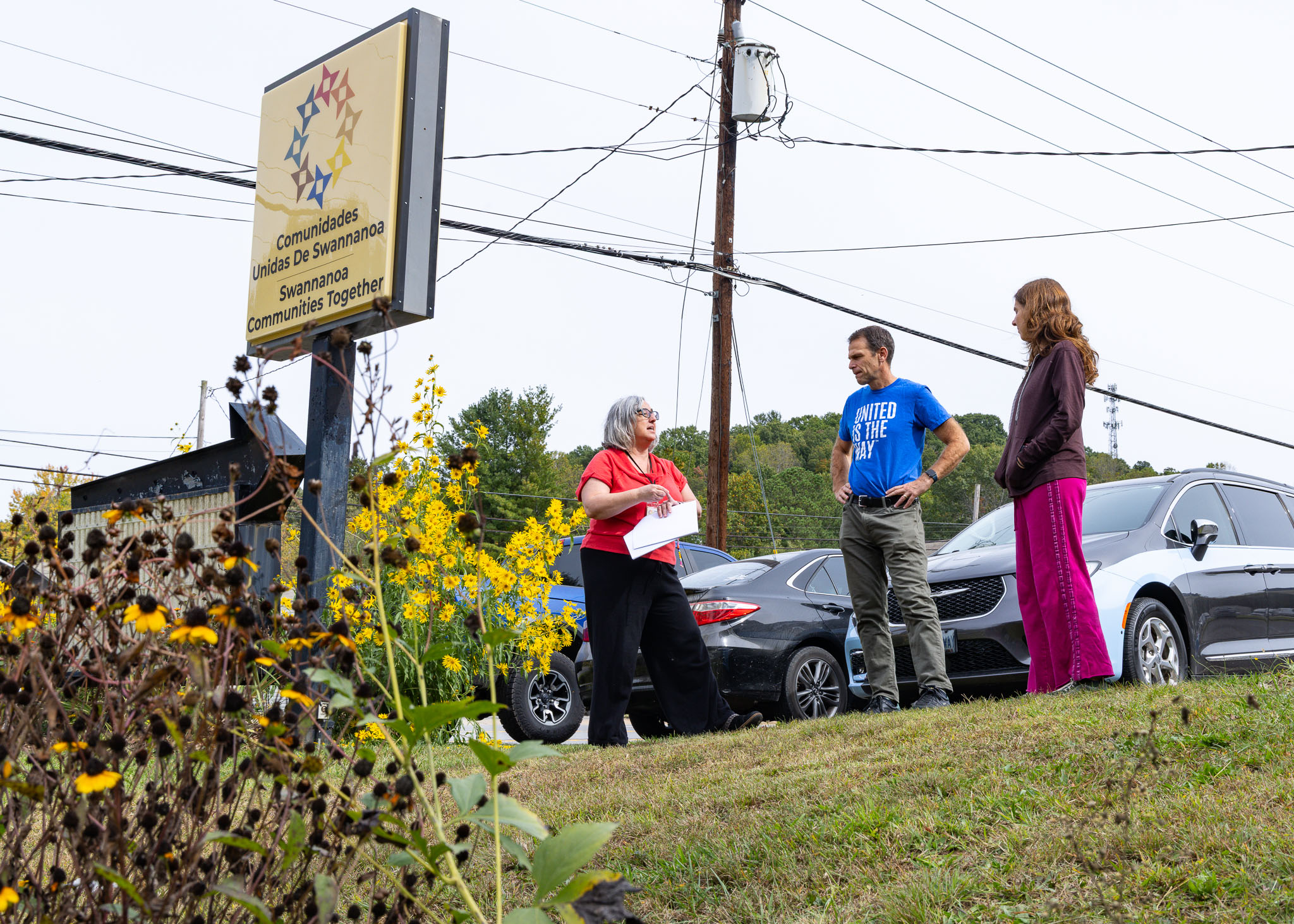
Beth Trigg, Director of Resource Development and Partnerships, and Ashley Cooper, Community Wellness Specialist, at Swannanoa Communities Together have a trained eye for this because not only do they serve Swannanoa, but they are from that community. As they drove United Way of Asheville and Buncombe County (UWABC) CEO Dan Leroy through neighborhood after neighborhood, they pointed out the signs that recovery is far from finished.
“Two years later, people are storing their stuff or living in all those temporary buildings,” Beth said, gesturing toward a lot filled with six temporary structures. “It’s been really difficult to learn how the disaster response system nationally thinks it’s okay for people to live in RVs for a really long time,” she added.
Even basic needs look different two years later. “When we say we pay for utilities, some of that is gas to fill up a generator,” Ashley Cooper explained.
Housing and utilities aren’t the only basic need that remains difficult to meet. Since the storm, Swannanoa has had no full-service grocery stores.
Access to something as fundamental as groceries remains a challenge for residents, adding another layer to the work of local organizations helping neighbors get back on their feet.
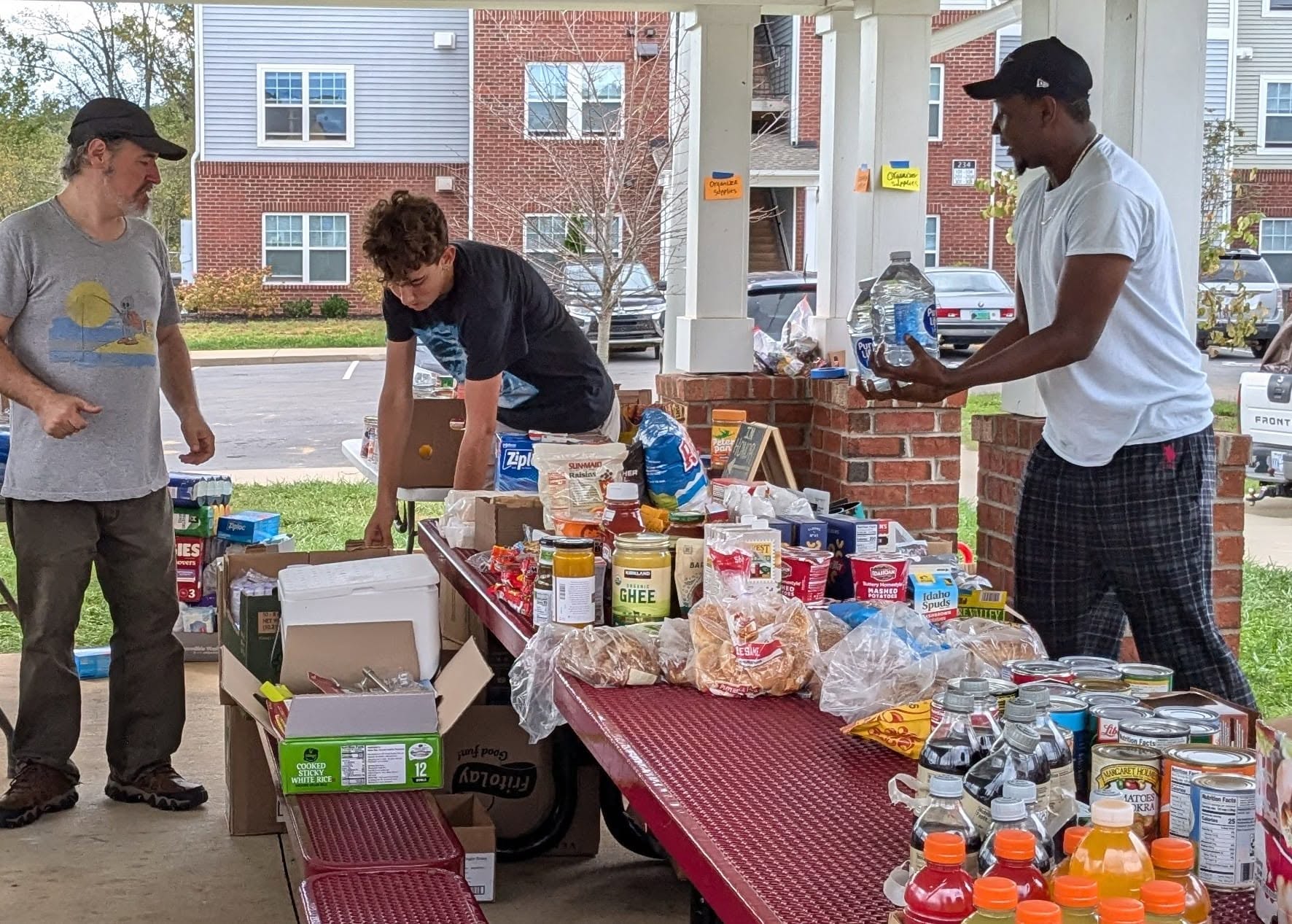
Swannanoa Communities Together grew out of this need. What began as a small donation drop-off and distribution point quickly became a community effort to get supplies, groceries, generators, and other essentials to neighbors. UWABC already had relationships with the organization's leaders through past projects and began providing them with funding within the first week after the storm.
Today, the need has not gone away. According to Swannanoa Communities Together's September 2026 report, 450 to 500 people visit the organization each month seeking food, housing, and support with other basic needs. What began as an emergency response has become an ongoing source of support for hundreds of neighbors.
The hundreds of people Swannanoa Communities Together reaches every month are just a percentage of the citizens many local organizations serve and that UWABC proactively reached out to as the disaster unfolded. And those connections were not just helpful in the moment. They became part of a much larger response network.
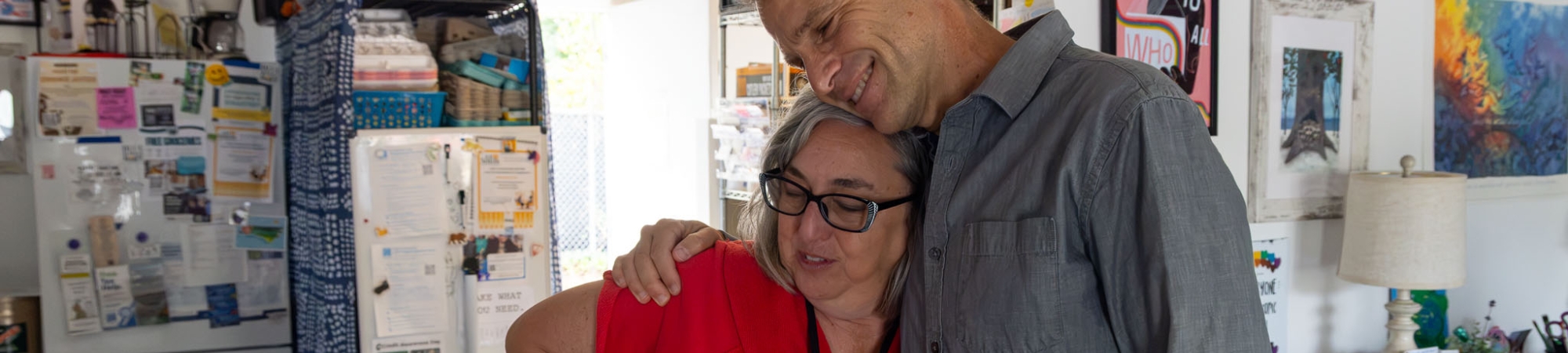
That network continues to matter. UWABC has supported Swannanoa Communities Together from immediate relief and essential supplies to unrestricted funding that helps maintain consistent staffing. As Ashley Copper explained, “The fact that we are open every single day, the same staff are there, the level of trust is just so deep.”
That consistency is not a small thing. It takes funding to keep people on staff, doors open, and relationships strong. And the need for that support is growing more urgent
City of Asheville report highlights the critical role that connecting organizations play in times of disaster and recovery.
Research conducted by Thrive on behalf of the City of Asheville through its Participatory Hub Mapping Project examined the relationships between organizations supporting community resilience.
Among the findings, UWABC was identified as the most connected organization in both incoming and outgoing community connections. UWABC also ranked highly in volunteer recruitment, fundraising and distribution, cross-sector coordination, shared infrastructure and information, and resource navigation. In other words, when the community needed to come together, UWABC was already connected to the people and organizations doing the work.
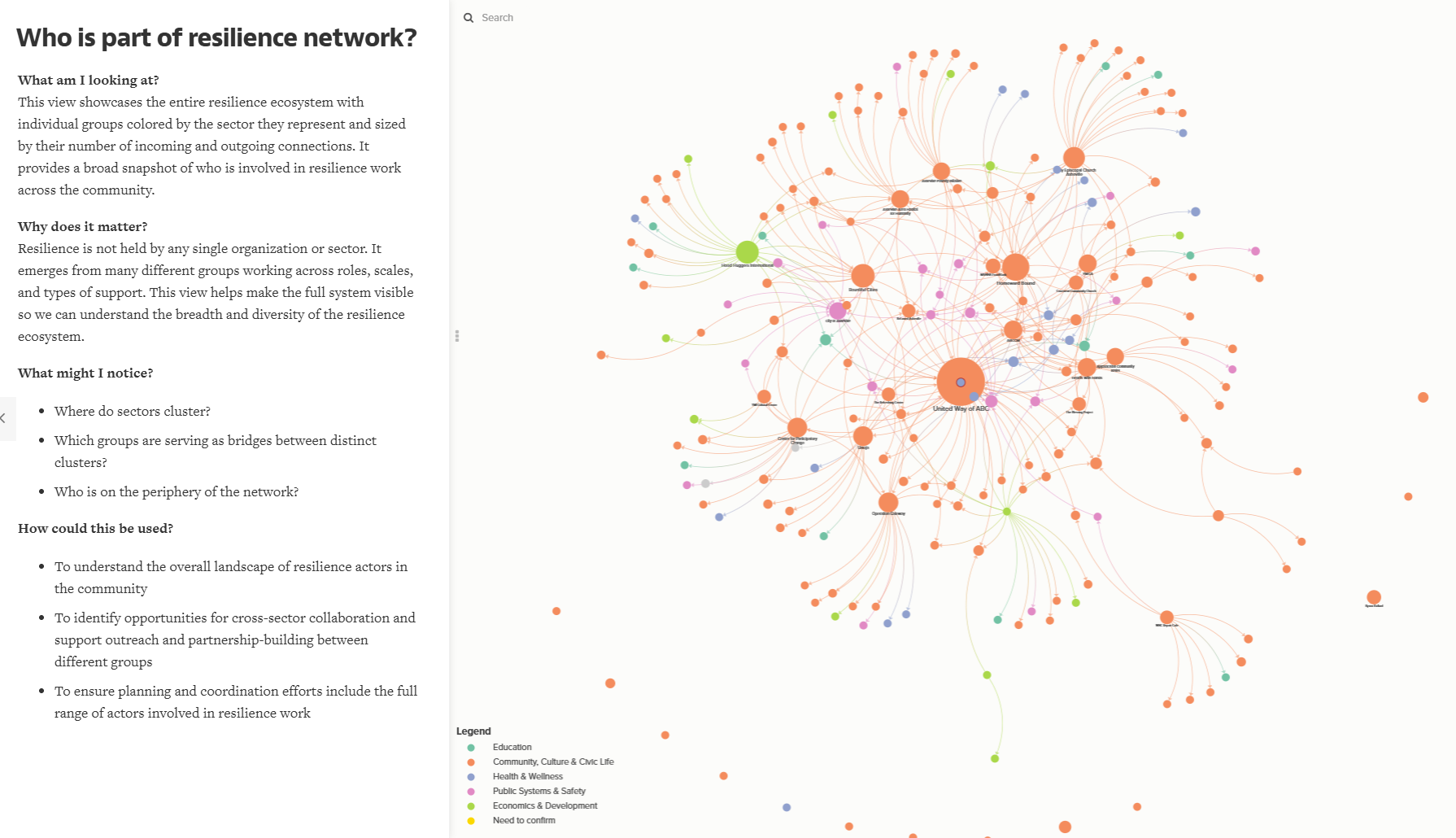
Where You Can Find The Full Presentation
This mapping study was designed to better understand the organic immediate response to the storm. We know this screenshot isn't ideal, and it doesn't convey the really incredible story of the full report and its interactive elements. So be sure to review the entire presentation here.
Two Years Later, The Work Is Not Over
-
59.6B
in estimated damage and recovery needs
-
912.3B
provided by the state of North Carolina
-
13%
of estimated damage and recovery needs have been covered by Federal aid
The numbers tell an important story: recovery funding has not come close to matching the scale of the need. And while communities wait for government resources, local organizations are still answering the call.
Source: wncrecovery.nc.gov
Buncombe County also experienced the highest number of destroyed homes in Western North Carolina, yet has received the lowest percentage of Community Development Block Grant Disaster Recovery funds among disaster-impacted counties.
This is where UWABC and its partners play a vital role. Through relationships with donors, businesses, nonprofits and organizations across the country, we help bring additional resources into the region and direct support toward needs that might otherwise go unmet.
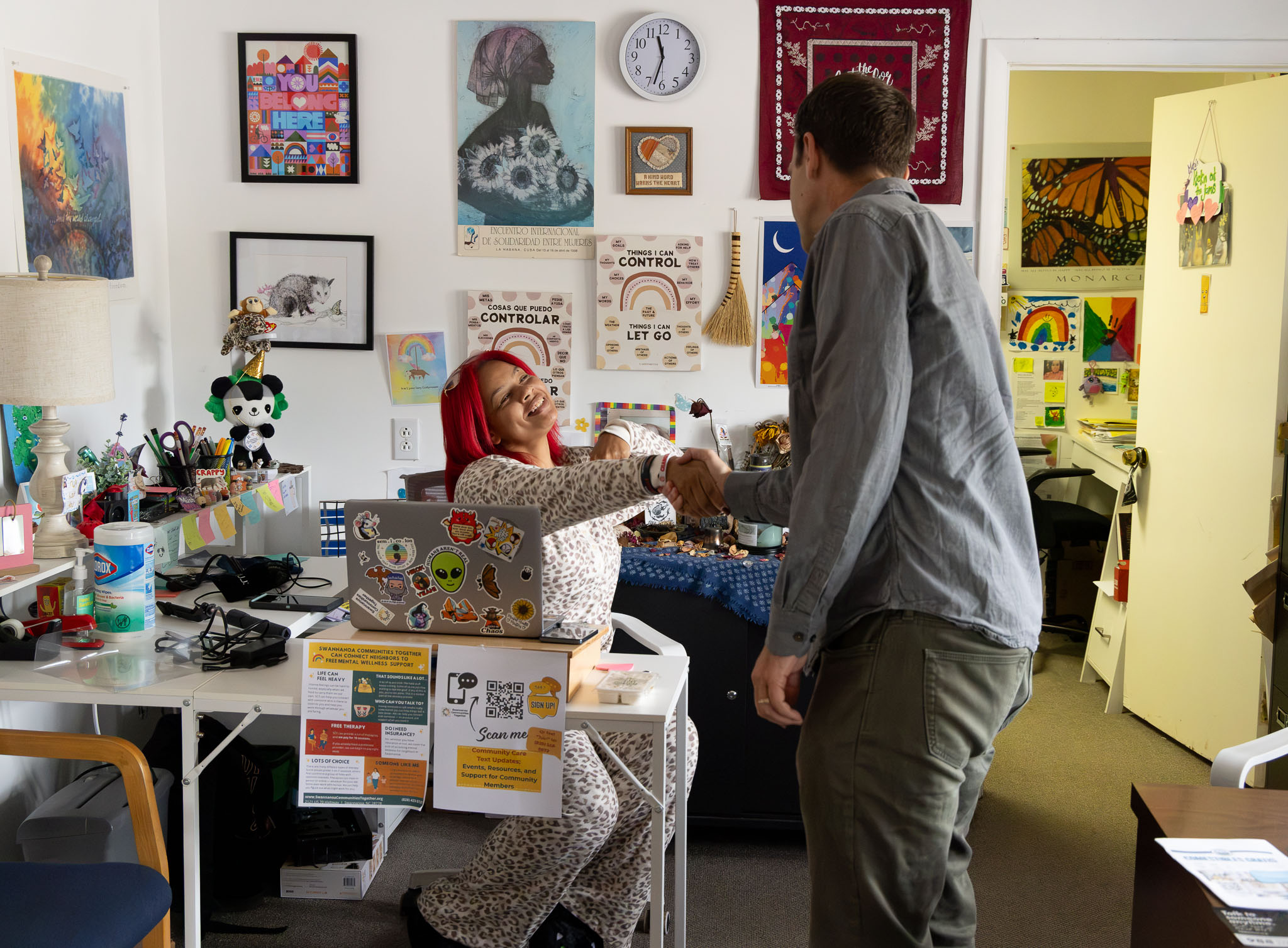
For Swannanoa Communities Together, that means keeping staff available, building out its current space, and continuing to help neighbors find stable housing. But the organization is also looking ahead.
Beth describes a vision for a community-based housing program that would, down the road, preserve naturally occurring affordable housing, support responsible landlords, and help tenants understand their rights. The idea could also include small grants to repair homes that could become rentals or remove barriers that keep people from finding housing.
“We began to imagine this community relationship-based housing program,” Beth said. “We want to preserve housing we have and prevent it from becoming vacation rentals.”
That is what long-term recovery looks like: not just replacing what was lost, but finding ways to build a stronger, more stable community for the future.
Swannanoa Communities Together is one example of how UWABC works alongside dozens of nonprofits, businesses, schools, and local governments to keep our region moving forward. We know the funding gap is real. We know homes still sit damaged, families are still working to recover financially, and the effects of Helene will be felt for years to come. And still, local organizations are carrying this work within a much larger funding gap.
The need in Western North Carolina is enormous, and the resources reaching our communities have not kept pace. We also know our community cannot afford to wait for someone else to act.
UWABC remains committed to bringing partners together, securing resources, and ensuring our neighbors are heard. From federal recovery efforts to the work happening on individual streets, we will continue showing up for the long work ahead.
Recovery is not measured only by what we rebuild. It is measured by whether our neighbors have the support, stability, and opportunity to thrive.
Don't Stop Here.
- Learn more about Swannanoa Communities Together.
- Volunteer and support Community Resilience and Recovery.
- Help to sustain this work by making your donation today.
- Need help with unmet needs as a result of Hurricane Helene? Contact the Buncombe County Long-Term Recovery Group